
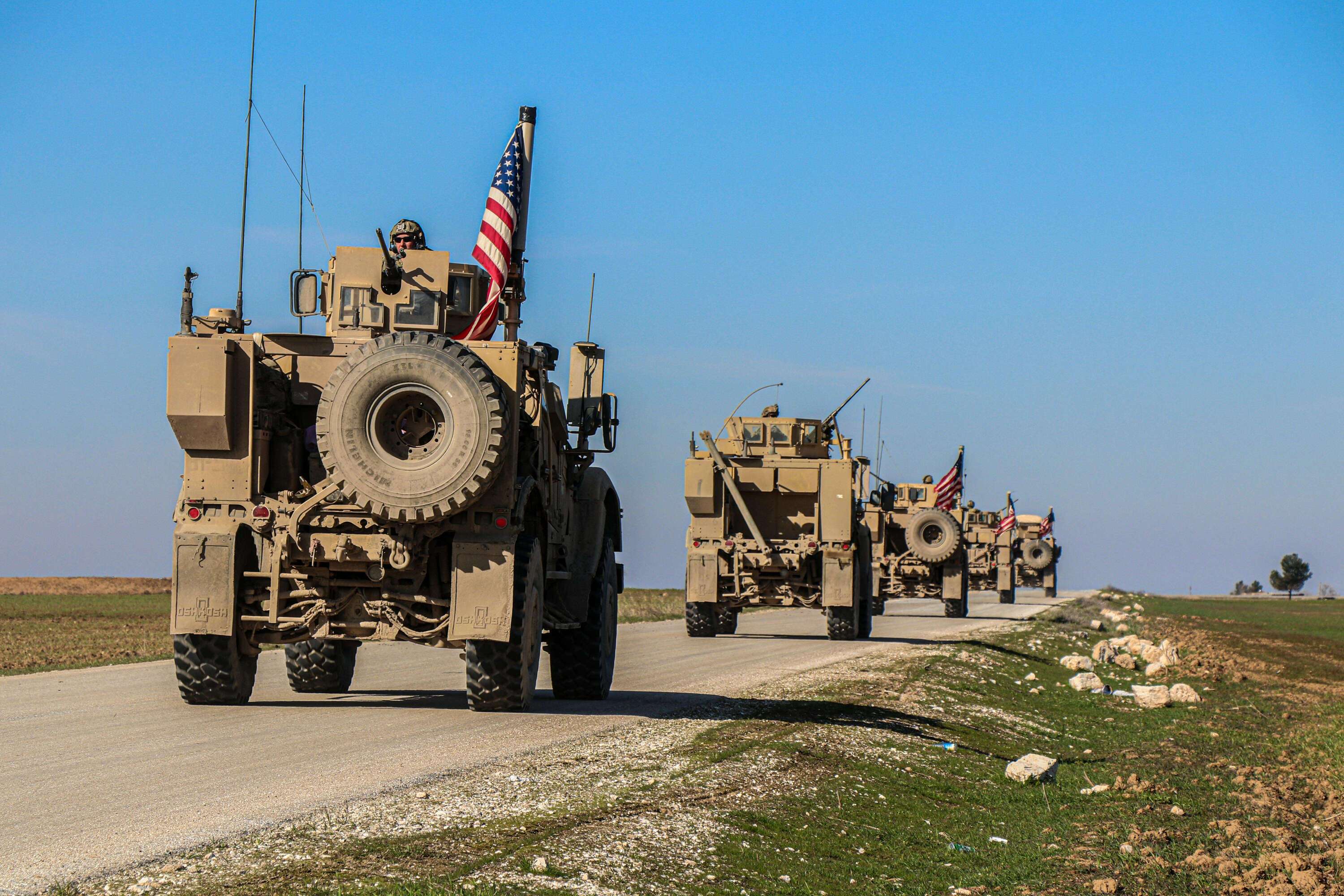
In December 2024, Bashar al-Assad’s government was finally toppled after 13 years of armed conflict which devastated Syria. Ahmed al-Sharaa, the new President of Syria, has stated his intention to unify and rebuild the country. However, Syria remains fractured, with the Syrian Democratic Forces still governing much of North and Eastern Syria, Druze opposition groups operating in Suwayda province in the South, and Islamic State cells across the country waiting to take advantage of further instability.
Al-Sharaa leads a ‘transitional’ government, which is set to govern for at least four or five more years until elections are to be held. The most powerful cabinet posts are currently held by officials of Hay’at Tahrir al-Sham (HTS), a Sunni Islamist armed group which Al-Sharaa led from 2017 until January 2025, and was one of the key rebel factions which toppled Assad’s Ba’athist regime. Al-Sharaa had previously been the founder and leader of the Al-Nusra Front from 2012, Al Qaeda’s Syrian arm, which rebranded in 2016 to form HTS, becoming a powerful player in Syria’s civil war backed by Turkey.
Since Assad’s regime fell almost a year ago, Syria has not yet completely returned to peace. Syria’s new transitional government is opposed by a variety of non-state actors within the country, and armed clashes have occurred continuously between the new government and groups seeking to obtain greater autonomy. In March of this year, clashes broke out in Latakia and areas surrounding Syria’s coast, the historical heartland of Syria’s Alawite community of which the Assad dynasty was composed. Organisations such as the Syrian Observatory for Human Rights (SOHR) reported mass killings of Alawite civilians and clashes occurred between Assad loyalists and government forces.
An investigation by the United Nations Human Rights Council (UNHRC) identified HTS and other Turkish-backed factions such as the Hamza division as key perpetrators of the massacres, which led to protests across Syria, both in traditionally Sunni regions as well as majority Kurdish SDF held cities and Druze areas. While many Alawites welcomed the fall of the Assad regime, many will now feel lingering resentment towards the new government for the atrocities that occurred.
One of Al-Sharaa’s biggest challenges in government will be attempting to absorb areas held by the Kurdish led Syrian Democratic Forces (SDF) into his administration. The SDF gained control over large swathes of the country during their campaign against the Islamic State in which they were a decisive factor in the organisation’s downfall in Syria. The interim government wants SDF forces to join the Syrian Army, and while the SDF’s commander-in-chief Mazloum Abdi has shown willingness to integrate, he stressed that the SDF should retain a level of autonomy as a “military bloc” and that any agreement must guarantee adequate representation and security for Kurds and other minorities.
Negotiations have been complicated by Turkey’s opposition to the SDF, which it views as a sister organisation to Kurdish militant groups within Turkey such as the PKK. During the civil war, Turkish Armed Forces entered Northern Syria in 2018 in “Operation Olive Branch” alongside Islamist rebel groups and again in 2019 with “Operation Peace Spring”, in which Turkey was widely accused of ethnically cleansing the occupied regions of Kurdish civilians. Turkey is deeply opposed to the SDF holding territory in Northern Syria near the Turkish border, and has pushed Syria to take a hard line against them in negotiations.
There have been continuous clashes between the Interim Government, backed by Turkey, and the SDF throughout the past year, with intense fighting in particular over the Tishreen Dam killing dozens of combatants on both sides. A ceasefire is in operation between the two sides as of the 8th of October 2025, though tensions remain high and clashes have been reported throughout November. The prospect of peace in Syria will depend heavily on whether negotiations to integrate the SDF can prove fruitful in the coming months, as Turkey has hinted that if negotiations are “delayed” for too long they may take action against the SDF themselves as they have in the past. Turkey exerts significant influence over the Syrian government, as it was a key actor that supported HTS in toppling Assad, and has already begun training the Syrian Army, exporting natural gas to Syria, and plans to sign a defence agreement with the Syrian Government. A large scale operation against SDF forces would lead to widespread casualties on both sides and could harm support for Al-Sharaa’s government both domestically and internationally.
In the South, clashes between Government security forces and Druze militants have been ongoing since March of this year, with Druze groups such as the “National Guard” seeking autonomy from the Interim Government and attempting to prevent the entry of security forces into the majority Druze city of Suwayda. Complicating matters is the intervention of Israel in favour of these groups, which has conducted airstrikes against government forces and in July hit the Syrian Military Headquarters in Damascus as a show of force.
Israel has claimed the strikes were designed to protect the Druze minority in Syria, while other analysts have asserted that Israel’s motivations are to ensure the Syrian government remains militarily weak enough that it will not be able to pose a significant threat to Israel. During Assad’s rule, Israel also conducted air strikes in Syria against groups such as the Iranian Revolutionary Guard Corps which were allied to and helped prop up the Syrian regime in its war against rebel groups, seeking to limit Iran’s military reach and capabilities in Syria. Israel’s recent strikes in Syria similarly in part seek to show Turkey that it will take action to limit the influence of hostile states and actors aligned with them in its neighbourhood.
Netanyahu’s government is suspicious of Turkey’s role in the region and hopes to send a message that Israel is able to exert power beyond its borders. Israel seeks to create a ‘demilitarized zone’ in Southern Syria along its borders, and has even conducted military incursions inside Syria to realize this goal. While the Syrian government has protested these actions, it has not attempted significant military resistance against them. Sharaa stated in November that negotiations are under way with Israel to reach a new security agreement, and that they are ‘a good distance on the way’ to reaching an agreement that will end clashes in the area. If an agreement is reached, it is likely that Druze forces will be less emboldened to resist security forces, but will also likely come with concessions that limit Syrian military presence in the South of the country. Israel has also spoken out in support of the SDF’s role in Syria, but has stopped short of intervening on their behalf militarily or promising protection, largely because they will be keen to avoid open confrontation with Turkey in their back yard.
Israel and Turkey have emerged as key international military actors in Syria, as Iran has seen its once powerful influence over Syria greatly diminish due to its close ally in the Ba’athist regime being toppled and the role of its proxy force Hezbollah being heavily diminished, partly by Israeli attacks against them last year. Russia, once a powerful ally of Assad and stakeholder in Syria, has similarly seen its influence dwindle by the fall of the Ba’athist government and its attention being focused on the war in Ukraine. Russia had previously used Tartus Naval Base on Syria’s coast as a key instrument to project power across the Mediterranean and beyond, but has now been largely evacuated and its use by Russia is now beholden to the new Syrian regime. While the Gulf states exert significant political and economic influence over Syria, they have taken a largely hands off approach militarily in the past year.
Peace in Syria over the next few years will depend largely on relations between Israel and Turkey, as the two sides have traded diplomatic blows in recent years and both seek to extend their influence across the region and influence local actors. Additionally, the Syrian government must consider how best to meet the demands of its minority groups and attempt to unify a diverse patchwork of religious and ethnic communities without resorting to military means.
Leave a Reply