
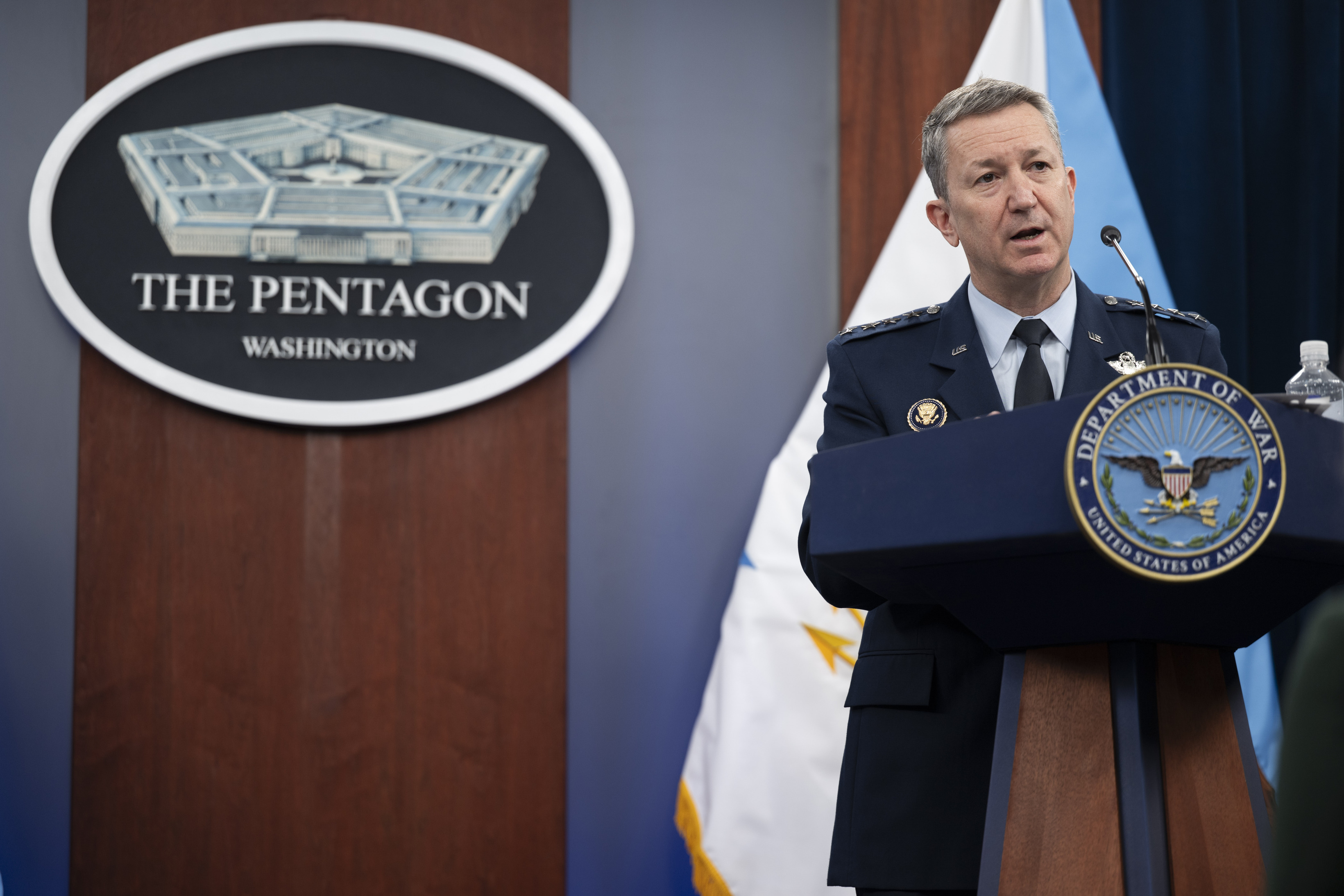
After over a month of targeted air strikes against Iranian military and government infrastructure, Iran’s leadership has remained defiant in continuing to fight on, even as much of its military capability has been destroyed. In a speech yesterday, Donald Trump claimed the war was ‘nearing completion’ and had nearly accomplished ‘all of America’s military objectives’, despite similar claims by Trump on 11 March that the war would be over ‘soon’. Amid global economic turmoil, skyrocketing fuel prices and Trump’s approval ratings hitting historic lows, the President himself appears unsure of how and when to disengage from the conflict.
Trump’s initial stated war goals included destroying Iran’s missile and military capabilities, preventing Iran from obtaining a nuclear weapon, and regime change in Tehran. While Iran’s military capabilities have been largely destroyed, experts have doubted Trump’s claims that Iran was close to producing a nuclear weapon, not least because Trump himself claimed to have ‘completely and totally obliterated‘ Iran’s main enrichment capabilities in air strikes in June of last year.
Trump’s goal of regime change, however, would likely require either a ground operation from US troops, or a large-scale sponsoring of proxy forces within Iran to unseat the regime. Both of these options come with enormous costs, risk, and would represent a significant escalation of the war, which has already proved overwhelmingly unpopular with the American public. This likely explains why Trump appears to have moved away from earlier comments about regime change, instead claiming to have already achieved ‘regime change’ through assassinations of Iran’s top leadership. In recent weeks, Trump has spoken increasingly of striking a ‘deal’ with the regime to end the war.
Trump claims that the US is in ‘ongoing discussions’ with Iran’s leadership, but little is known of the content of these discussions, or whether they are indeed occurring at all. In a Truth Social post yesterday, Trump claimed that Iran had asked for a ‘ceasefire’, signalling that the US would be open to ending strikes on Iran if the Strait of Hormuz is made ‘open, free and clear’, threatening to ‘blast’ Iran ‘into the stone age’ until that time. Meanwhile, Iran’s foreign ministry described the claims that Iran asked for a ceasefire as ‘false and baseless’.
Iran’s key strategy thus far has been to create as much disruption as possible to both the region and the global economy until the war is over. Despite its massively degraded military capabilities, Iran has successfully utilised asymmetric warfare against the US and its allies, targeting energy and US military facilities in neighbouring countries such as Qatar and the UAE with drones and missiles. Iran’s proximity to the Strait of Hormuz, through which 20% of global oil and gas transits, allows it to strike trade vessels with drones and missiles and choke the supply of global energy. This aims to create further pressure for the war to end from both the US’ regional allies and the broader international community.
With midterm elections approaching in the US, Trump will want to avoid being labelled responsible for the rising price of gasoline to American consumers and accusations that he has reneged on his repeated campaign promises of no new wars. While Trump’s foreign policy moves are often hard to predict, his latest statement of openness to a ceasefire in exchange for clear passage in the Strait of Hormuz reveals that he does not want global energy shortages to continue, and seeks a way out of being locked into a widening conflict.
The Iranian regime remains deeply distrustful of the US administration, stating last week in a press release, “We do not intend to negotiate. So far, no negotiations have taken place”. Iran insists that any peace deal must also include its proxy forces such as Hezbollah, a demand Israel is likely to reject as it continues operations against the group in Lebanon. With neither side signalling willingness to cede meaningful concessions, it is likely that Trump will either continue strikes against Iran indefinitely while the Strait of Hormuz remains closed, or he will end operations of his own accord claiming that his military goals have been achieved.
Leave a Reply