

Eight years of maximum pressure, a war, and a dead supreme leader later, Washington’s framework with Iran looks a lot like the deal it walked away from in 2018. Did Trump just rebuild the deal he destroyed?
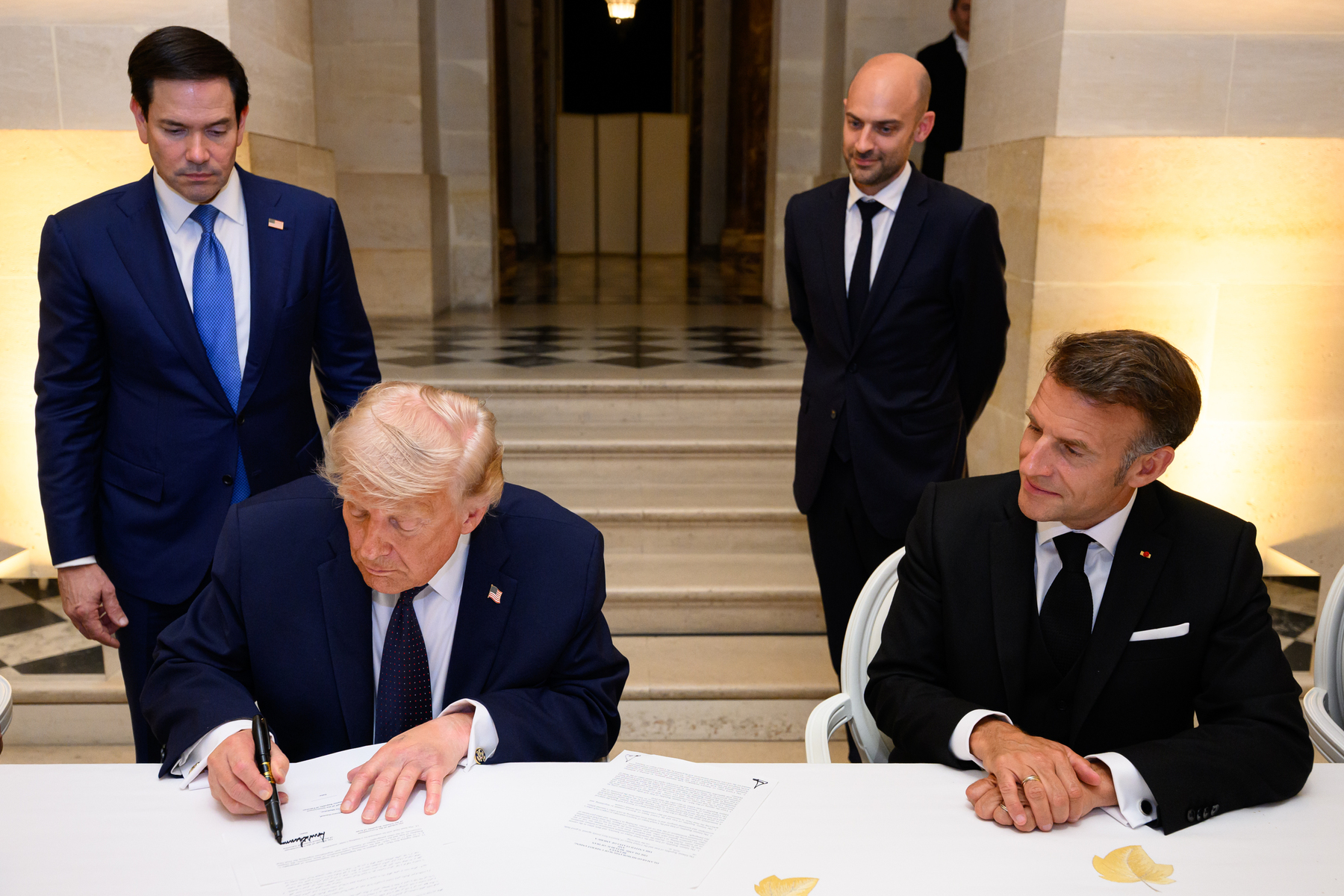
On June 14, 2026, Donald Trump signed a 14-point Memorandum of Understanding with Iranian President Masoud Pezeshkian in Geneva. Within hours, the Strait of Hormuz — closed for months, driving Brent crude to $105 a barrel and the Indian crude basket to $113.57 on a single day in March — began reopening. Sanctions relief was back on the table. A $300 billion reconstruction framework was being assembled. And at the heart of the agreement was a principle Trump had spent eight years condemning: a formal deal with Tehran trading nuclear restraint for economic normalisation. The deal he once called “one of the worst ever negotiated” now has a successor. The question policymakers and strategists must answer is not simply whether the two agreements differ. It is whether the difference justifies the price.
Vienna’s Logic: What the JCPOA Actually Built — and What It Left Unfinished
Signed in July 2015 by the P5+1 and Iran, the Joint Comprehensive Plan of Action was an engineered bargain: Iran would cap uranium enrichment at 3.67%, reduce its stockpile to 300 kilograms, and accept continuous IAEA inspections; in return, international sanctions would be lifted in phased, compliance-triggered tranches. Obama’s underlying rationale was strategic clarity: extend Iran’s nuclear breakout timeline to at least twelve months, buying diplomatic space for deeper engagement. The agreement was not perfect and nobody claimed it was. Its critics — concentrated in Jerusalem, Riyadh, and Washington’s Republican establishment — identified three structural gaps: sunset clauses that would expire Iran’s restrictions after ten to fifteen years; the exclusion of Iran’s ballistic missile programme; and the failure to address Tehran’s regional proxy network. These were legitimate objections. Whether they warranted outright abandonment — rather than renegotiation — is precisely what the subsequent eight years answered.
What Maximum Pressure Actually Produced: The Enrichment Paradox
Trump’s maximum pressure campaign, relaunched with full force in February 2025, dealt severe blows to Iran’s economy. The rial depreciated sharply, sanctions crushed oil export revenues, and the European powers — the UK, France, and Germany — triggered the JCPOA’s formal snapback mechanism in August 2025 after Iran suspended IAEA cooperation. What maximum pressure failed to do, measurably and conclusively, was constrain Iran’s nuclear programme. It accelerated it. The JCPOA had capped Iran’s enriched uranium stockpile at 300 kilograms. By May 2025, IAEA Safeguards Report GOV/2025/24 confirmed Iran’s total stockpile had reached 9,248 kilograms — more than thirty times the treaty limit. Of that, 440.9 kilograms was enriched to 60%: no credible civilian use, and sufficient, per the Center for Arms Control and Non-Proliferation, for fissile material for approximately nine nuclear weapons. Maximum pressure produced maximum enrichment. That is the central fact against which any assessment of Trump’s June 2026 agreement must be measured.

Fourteen Points, One Familiar Logic — and a Far Richer Economic Package
The 14-point MOU, now formally in effect, departs from the JCPOA in three substantive dimensions. First, it is a post-war agreement: signed after U.S.–Israeli strikes on Fordow, Natanz, and Isfahan in June 2025 that killed senior Iranian military and nuclear figures and prompted Iran to suspend all IAEA access. Second, its economic architecture vastly exceeds the JCPOA’s: alongside the full termination of U.S. sanctions — not merely phased relief — Washington and its regional partners have committed to a $300 billion reconstruction and development framework, with frozen Iranian assets to be progressively released as Tehran implements its commitments. Third, and most consequentially, the Strait of Hormuz occupies the agreement’s operative first provision: Iran has committed to safe, fee-free passage through the waterway, with the U.S. pledging to remove naval restrictions on Iranian ports and reduce its regional military presence to pre-war levels.
And yet: the underlying logic is unmistakably familiar. Iran formally pledges not to acquire or develop a nuclear weapon. The future of its enriched uranium stockpile will be decided in follow-up talks under international supervision. A 60-day negotiating window — extendable by mutual consent — will determine the nuclear specifics, while both sides maintain the current status of Iran’s programme and the U.S. refrains from new sanctions. The architecture is different. The principle is identical to 2015.

And yet: the underlying logic is unmistakably familiar. Iran formally pledges not to acquire or develop a nuclear weapon. The future of its enriched uranium stockpile will be decided in follow-up talks under international supervision. A 60-day negotiating window — extendable by mutual consent — will determine the nuclear specifics, while both sides maintain the current status of Iran’s programme and the U.S. refrains from new sanctions. The architecture is different. The principle is identical to 2015.
The Missile Concession Trump Refused to Make — Exactly Like Obama
The detail that most acutely illuminates the circular logic of the past eight years is this: Trump has explicitly rejected calls for Iran to surrender its ballistic missiles. His reasoning, offered publicly, is that Tehran cannot be expected to disarm while countries such as Saudi Arabia and Qatar maintain their own missile capabilities. It is a pragmatic argument. It is also almost precisely the argument Iran’s defenders made in 2015 to justify the JCPOA’s missile exclusion — the very exclusion Trump spent years identifying as a fundamental flaw that made the original deal inadequate. The architect of maximum pressure has, on the missile question, arrived at the same position as the architect of engagement. The question is whether eight years of confrontation, and the costs imposed on the global economy and on regional stability, were necessary to reach that conclusion.
Trump spent years condemning the JCPOA for excluding Iran’s ballistic missiles. On June 14, 2026, he signed a deal that excludes them too — and offered the same justification Obama’s defenders once did. The rhetoric changed. The outcome did not.
The Hormuz Variable: Iran’s Decisive Leverage
The Strait of Hormuz is the structural variable absent from 2015 that defines 2026. In the first half of 2025, an average of 20.9 million barrels per day transited the strait — roughly 20% of global petroleum consumption and one-quarter of all seaborne oil trade (EIA). When Iranian forces restricted access following the June 2025 strikes, flows fell nearly 30% to 14.6 million barrels per day in Q1 2026, forcing Middle East producers to cut combined output by over 11 million barrels per day. Brent hit $105 per barrel. The IEA estimates that Qatar and the UAE together supply approximately 20% of global LNG trade through the same passage, meaning the disruption cascaded into gas markets and power generation worldwide. Iran did not merely close a choke point. It demonstrated an ability to inflict economic pain on every country that imports Gulf energy — which is most of them. That capability is why the Hormuz clause, rather than the nuclear clause, leads the MOU. Iran chose the order deliberately.


India at the Chokepoint: When Strategic Autonomy Met a Closed Strait
No major power outside the direct conflict zone experienced the MOU’s consequences more viscerally than India. India imports 85–90% of its crude oil, and the Indian crude basket hit $113.57 per barrel on March 11, 2026 — a price that compressed fiscal space, forced ₹10 per litre excise duty reductions, and strained public sector refiners. India’s Ministry of Petroleum confirmed by March 2026 that approximately 70% of crude imports had been rerouted outside the Hormuz corridor, up from 55% pre-conflict, at significant logistical premium. With 28 Indian-flagged vessels and 778 Indian seafarers operating in the Persian Gulf, the human dimension matched the economic one. Most acutely: India’s Chabahar Port project — its strategic non-Hormuz corridor to Central Asia, developed precisely as a hedge against Gulf instability — was directly disrupted by the conflict it was designed to outlast. The June 2026 MOU’s Hormuz reopening provision matters more to India’s near-term economic stability than any nuclear clause in its text. New Delhi’s medium-term priorities are correspondingly clear: deepen strategic petroleum reserves, accelerate energy source diversification across Atlantic and African corridors, and ensure Chabahar’s operational resilience is not contingent on Gulf tranquillity.

The Longest Detour: The Deal That Survived Everything
Iran is presenting the June 2026 MOU as a massive American failure. The characterisation is one-sided but not entirely wrong. Trump promised something stronger than Obama’s deal. What Washington signed on June 14 offers Iran full sanctions relief rather than phased relief, a $300 billion reconstruction package rather than none, a missile exclusion identical to the one Trump condemned, and an enriched uranium stockpile thirty times larger than the one the JCPOA had constrained. Saudi Arabia, which cautiously welcomed the agreement, has simultaneously noted that trust with Tehran has been severely damaged — a reminder that even a signed MOU does not resolve the underlying regional security architecture.
Trump has already threatened to resume bombing if Iran veers from its commitments. That threat sits uncomfortably alongside a signed document pledging mutual non-force. The tension captures the essential character of this agreement: it is simultaneously an acknowledgement that the JCPOA’s underlying bargain was inescapable, and a bet that eight years of confrontation produced a stronger starting position for the 60-day nuclear negotiations that follow. Whether those negotiations yield a more durable or more constraining framework than Vienna 2015 remains to be determined. What is already determined is that the same fundamental logic — nuclear restraint for economic normalisation — survived maximum pressure, military strikes, a regional war, a closed strait, and the death of a supreme leader. That is the only conclusion history has yet delivered.

Leave a Reply