
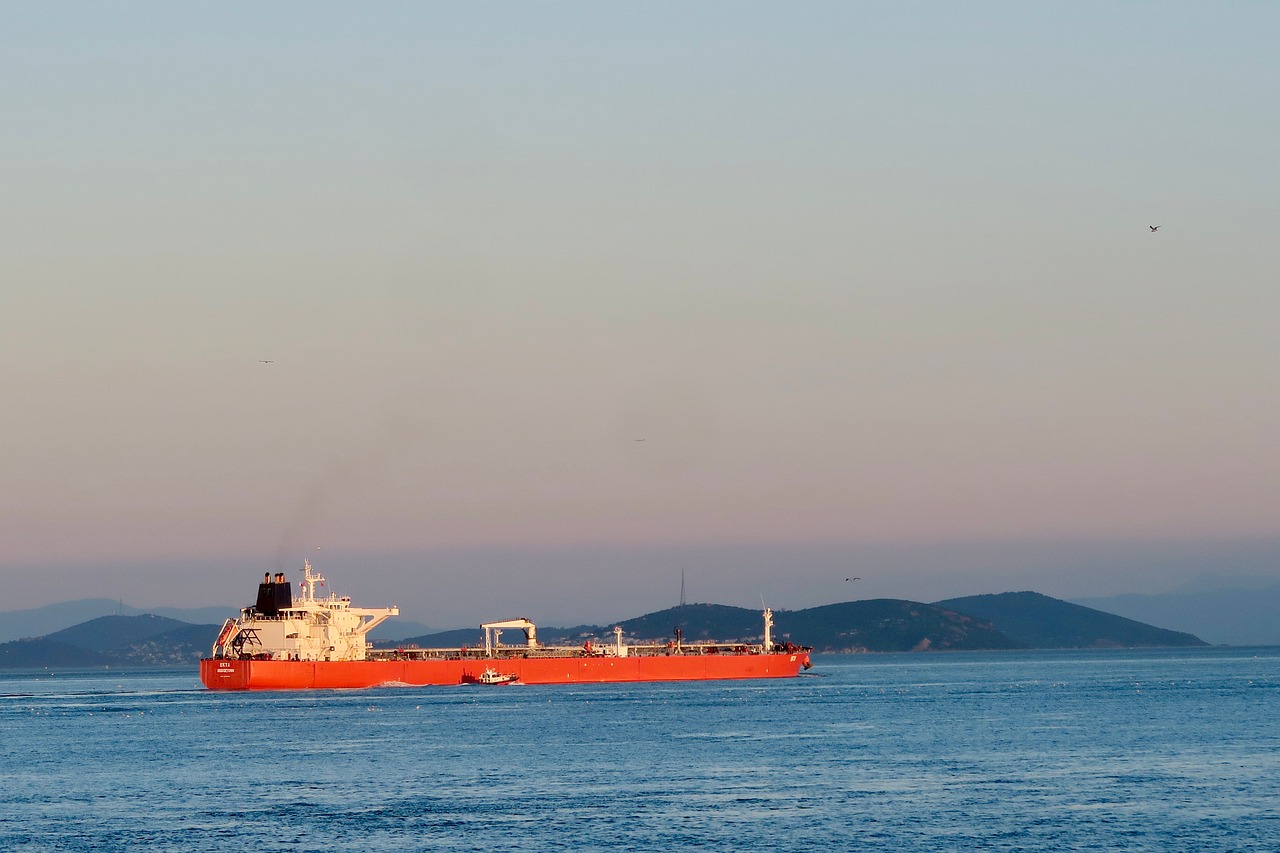
As strategic commodities have become central to contemporary geopolitical competition, governments are racing to secure the supply resilience of strategic resources such as rare earths and speciality gases. However, industrial strategies concentrate on mining and processing, with less attention given to the important nub that production alone does not ensure these commodities will reach global markets. Their circulation depends on specialised assets: dedicated physical infrastructure that stores, preserves and transports strategic commodities across global supply networks.
Cryogenic storage vessels and ISO portable tanks for helium, alongside liquefied natural gas (LNG) storage tanks, specialised carriers and floating storage and regasification units (FSRUs), perfectly represent this category of assets. Recent disruptions to helium and LNG markets showed that constraints on these assets can interrupt commodity circulation even when production remains available. Unlike mines, refineries and manufacturing facilities, specialised circulation assets do not produce strategic commodities; they make commodity circulation possible. Their geopolitical significance becomes most apparent when the available fleet is scarce, or the capacity to manufacture replacements is geographically concentrated.
When Storage and Transport Infrastructures Become Strategic
What distinguishes specialised storage and transportation assets from the many forms of infrastructure that underpin global commerce? Although economic activity depends on ports, railways, warehouses, shipping systems and production facilities, only a small proportion of this infrastructure becomes a matter of geopolitical concern. The defining feature is not an infrastructure’s routine economic function, but the consequences of its disruption – infrastructure acquires strategic significance when its failure cannot readily be substituted, bypassed or replaced, allowing operational constraints to develop into vulnerabilities for economic and resource security.
Storage and transport infrastructures acquire strategic importance because they connect production with end use. By preserving strategic commodities in a usable state and enabling their movement across global supply networks, they ensure that existing supply reaches the industries, power systems and hospitals that depend upon it. As long as supply chains function smoothly, this dependence remains largely unnoticed because commodity circulation proceeds without interruption. Geopolitical disruption exposes a different picture: production may continue, but existing supply can still fail to reach users because the infrastructure required to store or transport it has become constrained. Therefore, resource security depends as much on sustaining the movement of existing supply as on expanding production.
Crucially, that dependence becomes strategically significant only when circulation infrastructure cannot be expanded or replaced quickly enough to absorb disruption, since those that can be replicated rapidly rarely constrain supply for long. The culprit threatening supply chain security is storage and transport infrastructure that demands specialised engineering, limited manufacturing capability, fleet rigidity, and lengthy production lead times that restrict expedited production. Under these conditions, the resilience of commodity supply depends as much on specialised circulation infrastructure as on continued production.
The Helium Case
Different from most industrial gases, helium cannot be transported in its gaseous state. Rather, international trade relies on liquid helium, whose volume is almost 750 times smaller than its gaseous equivalent. Producing and maintaining this cryogenic state requires cooling helium to approximately 269°C, only four degrees above absolute zero, and storing it in vacuum-insulated cryogenic vessels and UN-certified ISO portable tanks engineered to minimise heat transfer over long distances. Replacing or expanding these storage and transport infrastructure is neither quick nor straightforward. Cryogenic helium ISO containers are precision-engineered pressure vessels that rely on multilayer vacuum insulation, specialised materials and advanced manufacturing techniques to minimise helium loss over extended journeys.
Before entering service, each container undergoes a prolonged cooling process and is designed to preserve liquid helium for around 40 days, with some of the latest designs extending holding times to around 48 days before boil-off becomes significant. Moreover, maintaining this performance requires extremely high manufacturing precision and thermal insulation. Only a handful of manufacturers possess the engineering capabilities required to produce these systems, making storage and transport infrastructure for helium difficult to scale rapidly when supply networks come under pressure.
The strategic importance of this infrastructure became apparent during the 2026 Gulf disruption, when industry reports indicated that around 200 cryogenic helium ISO containers became stranded, interrupting established trade routes for liquid helium. The disruption exposed a critical vulnerability in helium logistics. Unlike refrigerated systems, these containers rely on passive cryogenic insulation to maintain ultra-low temperatures, limiting their ability to preserve liquid helium to 40 to 48 days. Once transport delays exceeded this holding period, gradual boil-off became unavoidable, and helium had to be vented to prevent excessive pressure, permanently reducing the volume of usable supply available to the market. Nor could the disruption be resolved simply by deploying additional containers. Expanding the specialised fleet required highly specialised manufacturing capabilities and production lead times measured in months rather than days, leaving little scope to restore circulation in the short term. While helium production itself survived, existing supply could no longer reach semiconductor manufacturers, hospitals, research laboratories and other industrial users because the specialised storage and transport infrastructure needed to preserve and transport it had become the binding constraint on supply.
The LNG Case
Similarly, LNG demonstrates this strategic logic through a different form of storage and transport infrastructure, as natural gas cannot be traded over intercontinental distances in its gaseous state due to its low energy density. Prior to international trade via large-scale maritime transport, natural gas has to be liquefied by cooling it to approximately −162°C. Delivering LNG to overseas markets then relies on an integrated system of insulated storage tanks, purpose-built LNG carriers and FSRUs, which preserve the fuel in its cryogenic state during transport before converting it back into gaseous form for distribution through domestic pipeline networks.
LNG carriers are among the world’s most advanced commercial vessels, making fleet augmentation both time-intensive and technically demanding. In addition to specialised cryogenic cargo containment systems, their construction relies on advanced thermal insulation and boil-off gas management technologies that preserve LNG safely throughout long-distance transport. Besides, construction typically takes 30 to 40 months, with each vessel costing well over US$250 million. FSRUs involve a comparable level of engineering complexity, whether purpose-built or converted from existing LNG carriers. Building either type of infrastructure depends on a relatively small number of specialised shipyards, led by South Korea and China, whose technical capabilities and lengthy lead time substantially constrain how quickly additional storage and transport capacity can be brought during periods of geopolitical disruption.
These limitations assumed immediate strategic importance after Russia’s full-scale invasion of Ukraine in 2022 disrupted Europe’s energy system. Despite retaining access to global LNG production, Europe could not replace Russian pipeline gas merely through additional LNG cargoes. Before imported LNG could enter domestic pipeline networks, it first had to be received, stored and regasified, placing LNG carriers and FSRUs at the frontline of Europe’s energy response. Germany, which had no operational LNG import terminals before 2022, chartered multiple FSRUs and commissioned its first floating import terminal at Wilhelmshaven, followed by additional facilities at Brunsbüttel and Lubmin. Similar measures were adopted across Europe, including the expansion of import capacity at Eemshaven in the Netherlands and the deployment of a shared FSRU by Finland and Estonia. These projects did not increase global LNG production, but they enabled available supplies to enter European gas networks. Critically, the availability of LNG carriers and FSRUs defined the speed and scale at which Europe could substitute Russian pipeline gas with seaborne LNG. Although global production remained commercially available, its contribution to Europe’s energy security depended on specialised storage and transport infrastructure capable of converting it into usable supply.
Rethinking Strategic Commodity Security
Extraction, processing and manufacturing generate supply, but they do not determine whether that supply remains available once geopolitical disruption places pressure on global trade networks. Between production and consumption lies a distinct category of infrastructure responsible for preserving, storing and transporting strategic commodities. When this infrastructure is technically specialised, geographically concentrated and difficult to replace, it becomes a strategic asset because it determines whether supply can be transported and circulated within the value chain.
Despite comprising different commodity systems, the helium and LNG cases point to the same strategic mechanism. Helium required cryogenic ISO containers to preserve liquid helium during international transport, whereas LNG required specialised carriers and floating storage and regasification units to deliver imported gas into domestic energy systems. The technologies and supply chains differed, yet they fulfilled the same strategic function by maintaining commodity availability between production and end use. While commodity production continued throughout both disruptions, the principal constraint for resource security emerged within the infrastructure responsible for preserving, storing and transporting these commodities, making supply resilience contingent upon the availability of specialised storage and transport assets.
While mining and raw material processing remain indispensable, they account for only one dimension of supply resilience. Strategic vulnerabilities also emerge within the specialised infrastructure that connects production with consumption. Where this infrastructure cannot be substituted, expanded or replaced within the timescale of disruption, it becomes as decisive to commodity availability as production itself.
Strategic commodity security rests on two complementary foundations: the capacity to generate supply and the capacity to sustain its availability under geopolitical disruption. As geopolitical competition places growing pressure on global supply networks, assessing supply resilience requires evaluating specialised storage and transport infrastructure alongside extraction, processing and manufacturing. The resilience of these systems ultimately determines whether strategic commodities remain available to the industries, energy systems and critical services that underpin modern economies.
Lydia Tze is an analyst at Hong Kong Industrial Gas specialising in industrial gas logistics. She holds a BSc Politics & International Relations degree from the University of Exeter.


Leave a Reply